
Introduction:
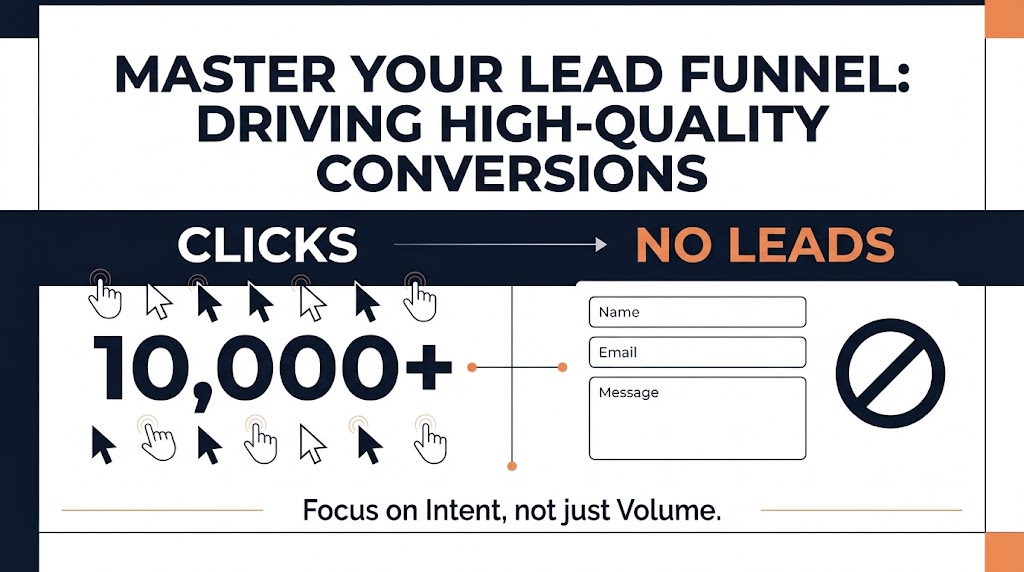
Are your ads get clicks but no leads? This is one of the most common problems businesses face when running digital advertising campaigns. You may see a good click-through rate (CTR), plenty of visitors, and strong engagement, but very few people actually submit a form or contact your business.
Getting clicks is only the first step. The real goal of a lead generation campaign is to turn those clicks into potential customers.
If your ads get clicks but no leads, the problem may not be your ad alone. Your targeting, offer, landing page, CTA, form, or overall customer journey could be stopping visitors from converting.
Let’s explore the main reasons behind this problem and how you can fix them.
What Does It Mean When Ads Get Clicks but No Leads?
When ads get clicks but no leads, it means people are interested enough to click your advertisement, but they are not taking the next action.
For example, suppose your ad receives 500 clicks but generates only a few or zero leads. This tells you that your advertisement is attracting attention, but something is preventing visitors from completing the conversion process.
A click does not always mean buying intent. People may click because they are curious, interested in your headline, comparing options, or simply exploring your offer.
That is why you need to analyze the complete journey from the ad click to the final lead.
1.Your Ad Attracts Attention but Not the Right Audience:
Targeting the incorrect audience is one of the main reasons of getting clicks but no leads are generated.
Even if your advertisement is sufficiently eye-catching to get clicks, the people who click might not actually require your products or services. For instance, if you are advertising digital marketing services, reaching a wide audience may result in a lot of inquisitive visitors who have no plans to work with a marketing firm.
Clicks and leads are separated as a result.
How to fix it
Define your ideal customer before launching your campaign. Consider:
- Age and location
- Industry or profession
- Interests
- Business size
- Problems they are trying to solve
- Buying intent
- Previous interaction with your business
A smaller but more relevant audience can often produce better leads than a large audience with low intent.
2.Your Ad Copy Creates Curiosity but Not Intent
Sometimes an advertisement gets clicks because of an attractive headline, but people who are prepared to act are not attracted to the content.
For instance:
“Why Do You Want to Grow Your Business?”
This might attract attention, but it doesn’t specify what the user will get.
Check to see if your ad language effectively conveys the problem, solution, benefit, and next step if your ads receive clicks but no leads.
How to Make It Right
Make the copy of your campaign specific.
Rather than just stating:
“Expand Your Company Online”
You might say:
“Get a Free Digital Marketing Strategy to Discover New Online Clients.”
A targeted message draws clients who genuinely require the service.
3. Your Offer Is Not Valuable Enough
People may click your ad but still decide not to share their information because the offer does not provide enough value.
Simply saying “Contact Us” may not always give users a strong reason to submit their details.
How to Fix It?
Give users a clear reason to take action.
Depending on your business, you can offer:
- Free consultation
- Free website audit
- Free strategy call
- Free quotation
- Demo
- Free business analysis
- Special introductory offer
Your offer should answer:
“What will I get if I submit my details?”
The clearer the value, the easier it becomes to turn clicks into leads.
4. Your Landing Page Does Not Match Your Ad
Imagine someone clicks an ad offering a free consultation, but the landing page immediately asks them to purchase a service.
This creates a mismatch.
When ads get clicks but no leads, always check whether your landing page delivers exactly what the advertisement promised.
Your ad and landing page should have a consistent:
- Message
- Offer
- Visual style
- CTA
- Customer expectation
This creates a smoother user experience and can improve your conversion rate.
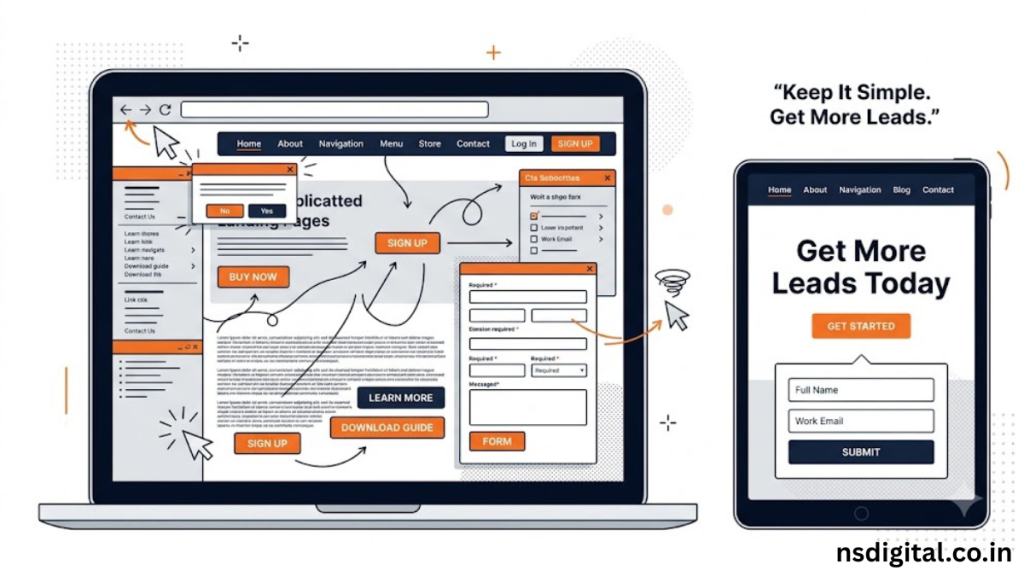
5. Your Landing Page Is Too Complicated
A landing page should make the user’s decision easy.
If visitors see too much information, multiple offers, complicated navigation, or too many buttons, they may leave without converting.
Common landing page problems include:
- Weak headline
- Too much text
- No clear CTA
- Too many links
- Slow loading
- Poor mobile design
- Lack of trust signals
- Confusing layout
How to Fix It?
Keep your landing page focused on one main conversion goal.
Use a strong headline, explain the main benefit, provide supporting information, add trust elements such as testimonials or reviews, and place a clear CTA where users can easily find it.
6. Your Call-to-Action Is Weak
Your CTA tells the visitor what to do next.
If your campaign goal is lead generation but your CTA simply says “Learn More,” users may not understand what action you want them to take.
How to Fix It?
Use a CTA that clearly communicates the next step.
Examples include:
- Get a Free Consultation
- Request a Quote
- Book a Free Call
- Get Started
- Contact Us
- Get Your Free Audit
A clear CTA reduces confusion and encourages visitors to move forward.
7. Your Lead Form Is Asking for Too Much Information
A long form can easily turn an interested visitor into a lost lead.
If your form asks for name, email, phone number, company name, address, job title, budget, business size, and several other details, users may decide that it is not worth the effort.
How to Fix It?
Keep your first form simple.
For example:
Name + Phone/Email + One relevant question
Once you receive the lead, you can collect additional information during a call or follow-up.
Reducing unnecessary fields can make the conversion process much easier.
8. Your Website Is Not Mobile-Friendly
Many people discover businesses through mobile advertisements. If your landing page does not work properly on smartphones, you may lose potential leads.
When ads get clicks but no leads, check your mobile experience carefully.
Look for:
- Small text
- Difficult-to-click buttons
- Slow loading
- Broken layouts
- Hard-to-use forms
- Images covering important content
How to Fix It?
Test your landing page on different mobile devices before launching your campaign.
Make sure the headline is readable, the CTA is easy to find, and the form can be completed comfortably on a small screen
9. Your Audience Is Not Ready to Convert
Not every person who clicks an ad is ready to become a customer.
Some users are only researching. Others may be comparing competitors or trying to understand pricing and services.
This is why ads getting clicks but no conversions can sometimes be related to the audience’s stage in the buying journey.
How to Fix It?
Create different strategies for different audience stages.
Cold audience: People who are discovering your brand.
Warm audience: People who have visited your website or interacted with your content.
Hot audience: People who have shown strong purchase intent.
For example, a cold audience may respond better to educational content, while a warm audience may be more interested in a consultation or offer.
10. You Are Focusing Only on Clicks
Clicks are useful, but they are not the final goal of a lead generation campaign.
If your ads get clicks but no leads, don’t judge campaign success only by CTR.
You should also monitor:
- Number of leads
- Conversion rate
- Cost per lead
- Lead quality
- Landing page conversion rate
- Cost per qualified lead
For example, 1,000 clicks with zero leads is not necessarily better than 200 clicks with 20 qualified leads.
The quality of traffic matters more than the volume of traffic.
How to Turn More Ad Clicks Into Leads?
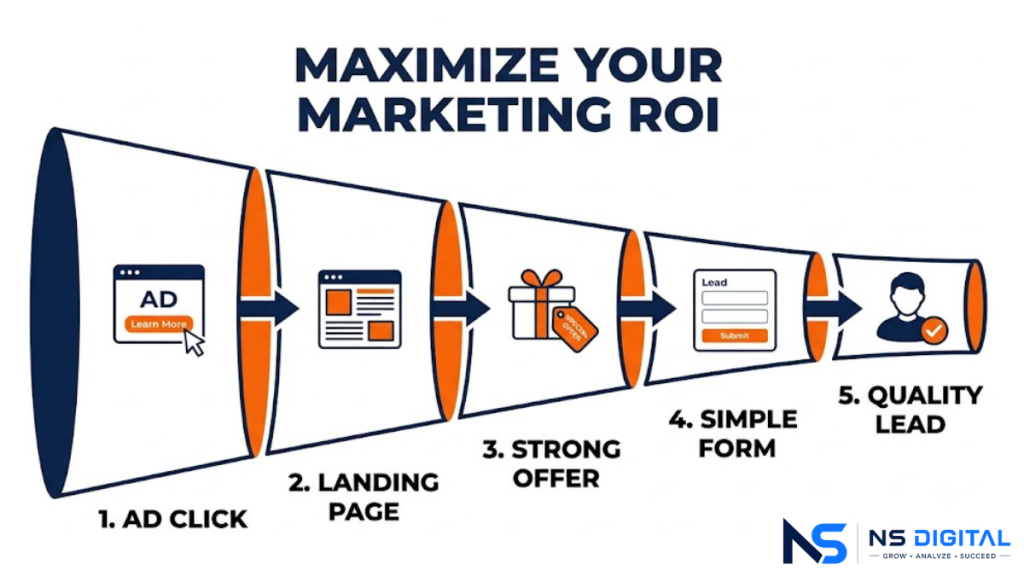
If you want better results from your advertising campaigns, focus on the complete conversion funnel.
Step 1: Improve Your Targeting
Make sure your ads reach people who actually need your product or service.
Step 2: Strengthen Your Ad Message
Clearly communicate the customer’s problem, your solution, and the benefit.
Step 3: Create a Relevant Offer
Give people a strong reason to take action.
Step 4: Optimize Your Landing Page
Keep the page simple, fast, mobile-friendly, and focused on one conversion goal.
Step 5: Improve Your CTA
Use direct and action-oriented language.
Step 6: Simplify Your Form
Ask only for the information you actually need.
Step 7: Track Conversions
Don’t stop at measuring clicks. Track what happens after the click.
Quick Checklist When Ads Get Clicks but No Leads.
Before changing your entire campaign, check these points:
- Is the audience relevant?
- Does the ad clearly explain the offer?
- Does the landing page match the ad?
- Is the offer valuable?
- Is the CTA clear?
- Is the form short?
- Does the page work well on mobile?
- Is the landing page fast?
- Are you tracking conversions correctly?
- Are you measuring lead quality?
Finding the exact point where visitors leave can help you improve your campaign without unnecessarily increasing your advertising budget.
Final Thoughts
If your ads get clicks but no leads, don’t worry. Find where people are dropping off and fix it step by step. Better targeting, a clear offer, and a simple landing page can turn more clicks into quality leads.