
Introduction:
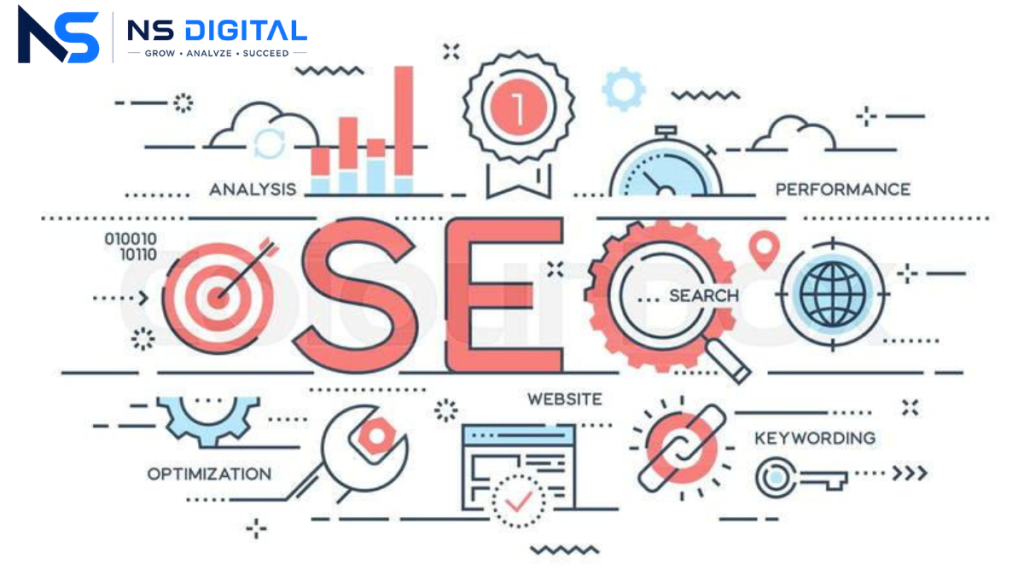
If you want your business to appear higher on Google and attract more potential customers, understanding what is SEO is an important first step. Search Engine Optimization (SEO) is the process of improving a website so that search engines can understand its content and show it to relevant users.
When people search for products, services, or information online, they usually choose results that appear near the top of the search page. A well-optimized website has a better opportunity to reach these users through organic search.
In this guide, we will explain what is SEO, how SEO works, the main types of SEO, why it matters for businesses, and how a strong SEO strategy can improve online visibility.
What Is SEO?
SEO stands for Search Engine Optimization. It helps your website appear higher on Google when people search for products, services, or information related to your business.
For example, if someone searches “digital marketing agency in Surat,” SEO can help your website appear in relevant search results.
In simple words, SEO helps more people find your website online and can bring more traffic, leads, and customers.
How Does SEO Work?
To understand how SEO works, it is useful to understand how search engines process websites.
Search engines generally go through three important stages:
1. Crawling
Search engines use automated programs called crawlers or bots to discover web pages. These crawlers follow links from one page to another and collect information about websites.
If your website has a clear structure, working links, and properly accessible pages, search engine crawlers can more easily discover your content.
2. Indexing
After discovering a page, search engines analyze and store information about its content. This process is called indexing.
Google considers factors such as page content, keywords, images, links, and other signals to understand what a page is about.
If a page is not properly indexed, it may not appear in search results even if the content is useful.
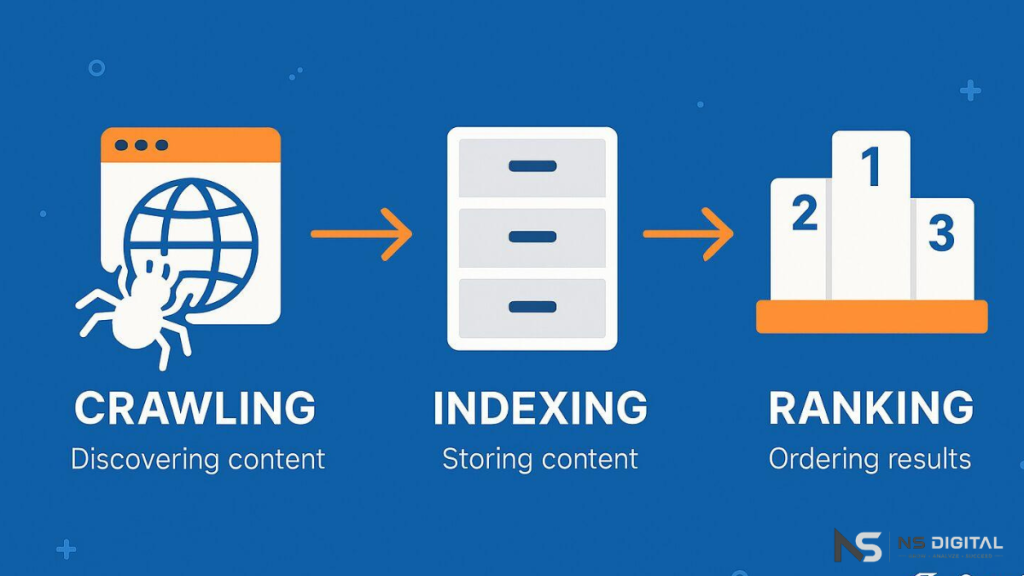
3. Ranking
When someone performs a search, the search engine selects and orders relevant pages based on many ranking signals.
These signals can include content relevance, website quality, page experience, backlinks, technical factors, and the overall usefulness of the page.
This is why SEO is not simply about adding keywords to a page. A successful SEO strategy focuses on making the entire website useful, accessible, trustworthy, and relevant.
Why Is SEO Important for Businesses?
SEO can play an important role in building a strong online presence. Most customers use search engines to find businesses, products, services, and answers to their questions.
If your website does not appear when potential customers search for services related to your business, you may miss valuable opportunities.
Here are some important benefits of SEO:
Increase Organic Website Traffic
Higher visibility in relevant search results can help bring more visitors to your website without paying for every individual click.
Build Online Visibility
Consistent SEO helps your business appear for relevant searches and increases awareness among potential customers.
Generate Quality Leads
People who search for a specific service often already have an interest or need. Ranking for relevant keywords can help attract visitors who are more likely to become leads.
Improve User Experience
Good SEO involves improving website structure, navigation, page speed, mobile usability, and content. These improvements can also make the website easier for visitors to use.
Build Long-Term Value
Paid advertising can provide immediate visibility while a campaign is running. SEO, on the other hand, can build long-term organic visibility when a website is consistently maintained and improved.
Main Types of SEO:-
SEO includes several different areas. Understanding these areas can help you create a more complete optimization strategy.
1. On-Page SEO
On-page SEO focuses on elements that can be optimized directly on your website.
Common on-page SEO activities include:
- Keyword research and placement
- Optimizing page titles
- Writing useful headings
- Improving meta descriptions
- Creating high-quality content
- Optimizing images and alt text
- Improving internal linking
- Creating clear URLs
The goal is to help search engines and users understand the purpose and value of each page.
2. Technical SEO
Technical SEO focuses on the technical foundation of your website.
Important technical SEO elements include:
- Website speed
- Mobile responsiveness
- Website security
- XML sitemaps
- Crawlability
- Indexability
- Proper URL structure
- Broken-link management
- Structured data
A technically healthy website makes it easier for search engines to access and understand your pages.
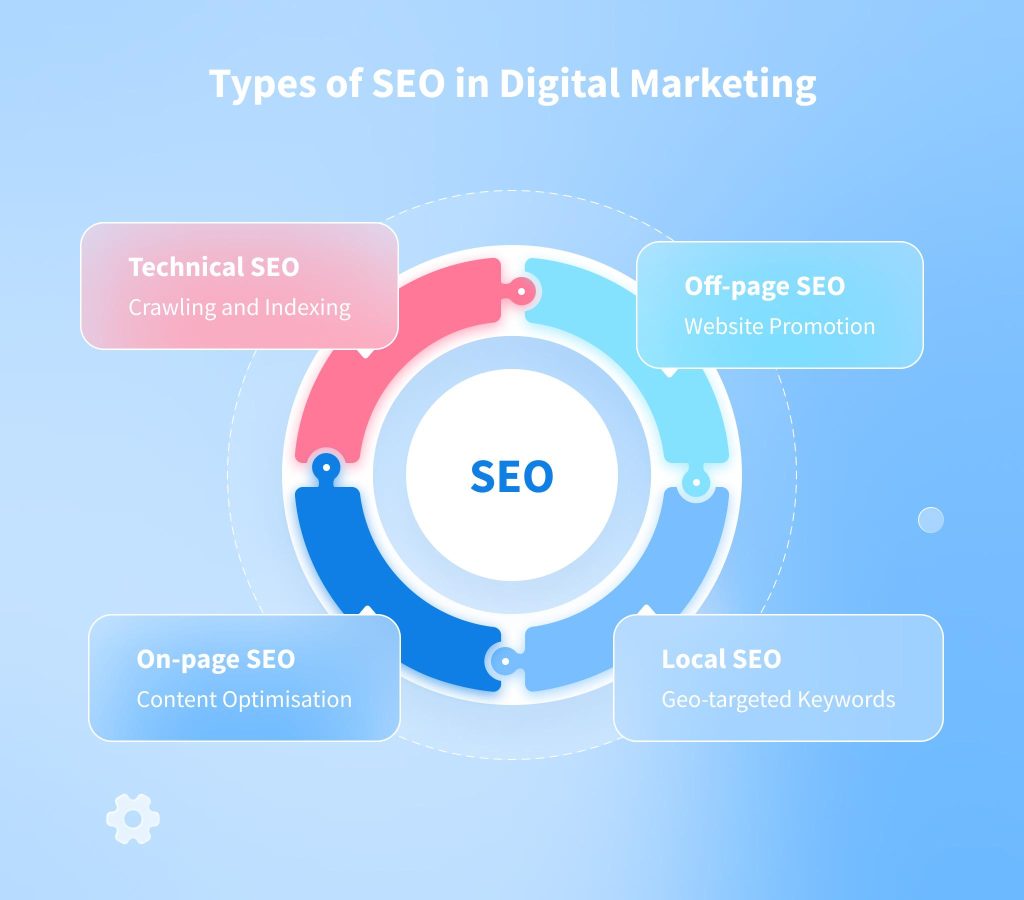
3. Off-Page SEO
Off-page SEO involves activities outside your website that can support its authority and reputation.
One of the most well-known areas is link building. When reputable and relevant websites link to your content, those links can help search engines understand that your website may be a useful resource.
Off-page SEO can also involve brand mentions, digital PR, business listings, and other activities that improve your website’s online reputation.
4. Local SEO
Local SEO focuses on improving visibility for searches connected to a specific location.
For example, a customer might search for “digital marketing agency near me” or “web design company in Surat.”
Local SEO can include optimizing your Google Business Profile, maintaining consistent business information, collecting genuine customer reviews, creating location-relevant content, and improving local website signals.
If you want to learn specifically about local search optimization, check out our guide on Local SEO for Small Businesses.
What Are Keywords in SEO?
Keywords are words and phrases that people type into search engines when looking for information, products, or services.
For example, someone looking for SEO services might search for:
- SEO services
- SEO company
- digital marketing agency
- SEO agency near me
- search engine optimization services
Keyword research helps businesses understand what their potential customers are searching for.
However, effective SEO is not about repeating the same keyword many times. Search engines have become much better at understanding topics and context.
Instead of keyword stuffing, focus on creating useful content that naturally answers the user’s search intent.
What Is Search Intent?
Search intent refers to the reason behind a user’s search.
For example, someone searching “what is SEO” is probably looking for educational information. Someone searching “SEO agency near me” may be looking for a service provider.
Understanding search intent helps you create the right type of content for your audience.
Common types of search intent include:
- Informational: The user wants to learn something.
- Navigational: The user wants to find a specific website or brand.
- Commercial: The user is researching products or services.
- Transactional: The user is ready to take action or make a purchase.
Matching your content with search intent can make your SEO strategy more effective.
How Long Does SEO Take to Show Results?
One common question businesses ask is how long SEO takes to work.
There is no fixed timeline because SEO results depend on factors such as website age, competition, industry, current rankings, content quality, technical health, backlinks, and the SEO strategy being used.
Some improvements may become visible relatively quickly, while competitive keywords can take considerably longer.
SEO should therefore be viewed as a long-term marketing strategy rather than a quick solution. Regular content creation, technical improvements, optimization, and performance monitoring are important for sustainable growt
Common SEO Mistakes to Avoid:-
Understanding what is SEO is only the beginning. Avoiding common mistakes is equally important.
Keyword Stuffing
Using the same keyword excessively can make content unnatural and difficult to read. Use keywords naturally and focus on helping the reader.
Duplicate Content
Publishing substantially duplicated content across multiple pages can make it harder for search engines to determine which page should rank.
Ignoring Mobile Users
A large number of people browse websites using smartphones. Your website should provide a smooth experience across different screen sizes.
Slow Website Speed
Slow-loading pages can create a poor user experience. Optimize images, reduce unnecessary elements, and maintain a technically healthy website.
Creating Content Only for Search Engines
Content should be created for people first. If visitors cannot find useful answers, rankings alone will not create meaningful business results.
Ignoring Analytics
Without tracking performance, it is difficult to know which pages, keywords, and strategies are producing results. Use reliable analytics and search performance data to make informed decisions.
How to Build an Effective SEO Strategy
A practical SEO strategy usually starts with understanding your business goals and target audience.
Begin with keyword research to identify relevant topics and search terms. Then optimize important website pages and create helpful content that answers customer questions.
Next, improve the technical health of your website, strengthen internal linking, build relevant authority, and optimize your local presence when location-based searches matter.
Finally, monitor your performance and make improvements based on real data.
SEO is an ongoing process. Search behavior, competitors, websites, and search engine systems continue to change, so regular optimization is important.
SEO vs Paid Advertising
SEO and paid advertising can both help businesses attract visitors, but they work differently.
With paid advertising, businesses pay to display ads for selected keywords or audiences. This can provide immediate visibility, but traffic generally stops when the advertising campaign ends.
SEO focuses on earning organic visibility through website quality, relevance, content, authority, and technical optimization.
Many businesses can benefit from using both strategies. Paid campaigns can generate immediate traffic while SEO builds long-term organic visibility.
Final Thoughts
SEO is not just about ranking higher on Google—it’s about getting your business in front of the right people. With useful content, a well-optimized website, and consistent SEO efforts, you can improve visibility, attract quality traffic, and turn more visitors into customers.